Onion Routing Explained: How It Makes Communication Effectively Untraceable (And Why We Use It)
About 2.5 million people rely on the Tor network every day for onion routed traffic, yet most of their friends still believe that “end-to-end encryption” is enough. It is not. Encryption hides what you say, but without anonymity and onion routing, your metadata still exposes who you are talking to, when, how often, and from where. In a world built on surveillance, we need to analyze onion routing not as a niche trick, but as the backbone of truly untraceable communication.
.png)
About 2.5 million people rely on the Tor network every day for onion routed traffic, yet most of their friends still believe that “end-to-end encryption” is enough. It is not. Encryption hides what you say, but without anonymity and onion routing, your metadata still exposes who you are talking to, when, how often, and from where. In a world built on surveillance, we need to analyze onion routing not as a niche trick, but as the backbone of truly untraceable communication.
Key Takeaways
QuestionShort AnswerWhat is onion routing in simple terms?Onion routing wraps your traffic in multiple encryption layers and sends it through several relays so that no single node can see both who you are and where your message is going.How does onion routing make communication untraceable?By splitting knowledge across nodes, hiding IP addresses, and obfuscating paths, onion routing breaks the link between sender, receiver, and message metadata, which is essential for any serious privacy system like Blockd.Is encryption alone enough to protect my privacy?No. Your metadata can still reveal your identity, patterns, and social graph. Our deep dive on this is in this metadata analysis.Why does anonymity require more than a phone-number-based app?Phone numbers, emails, and KYC data tie accounts to your real identity. We reject that model, as outlined in our guide to secure messengers, because true privacy requires anonymity by design.How does onion routing fit into modern anonymity strategies?Onion routing, Tor, and compartmentalization work together as a layered defense, which we break down in our anonymity techniques article.What role does encryption still play with onion routing?End-to-end and zero-knowledge encryption still protect message content, while onion routing protects who is talking to whom, as discussed in our encryption overview.Why is privacy a human right, not paranoia?Because surveillance shapes behavior, power, and democracy itself. We argue this in detail in our human-rights-focused privacy piece.
1. What Onion Routing Actually Is (And Why Anonymity Needs It)
Onion routing is a network-level technique that sends your traffic through multiple encrypted hops so that no single relay ever knows the full story. One relay might see your IP, another might see the final destination, but none can reliably connect you to your communication partner. This is how we move from “encrypted but identifiable” to “encrypted and effectively untraceable.”
Traditional messaging apps that rely on a central server tied to your phone number make surveillance efficient by design. Even if messages are encrypted, metadata and account identifiers are exposed. Onion routing flips that model by routing traffic over a large, distributed relay network, making mass surveillance, profiling, and correlation attacks dramatically harder and more expensive.
2. Why Encryption Alone Fails Without Onion Routing
You think encrypting your messages keeps you safe. Think again. Content encryption hides what you say. It does not hide when you talk, with whom, from which IP address, in what country, or how your social graph evolves over time. That is metadata, and metadata is often more revealing than message content.
Onion routing directly addresses this gap. By relaying traffic through multiple independent nodes, it obscures the network-level metadata that would otherwise betray your identity. This is the difference between “secure from casual snooping” and “resistant to state-level surveillance, corporate profiling, and long-term behavioral analysis.”

3. Metadata: The Real Threat That Onion Routing Neutralizes
Metadata is the silent dossier built around your life. Communication metadata tracks who you talk to and when. Device and location metadata quietly follows your movements. Social graph metadata maps your relationships and influence. Put together, it can reconstruct your story even if nobody ever sees a single decrypted message.
Onion routing disrupts these surveillance narratives by making the network path itself noisy and ambiguous. When your messages are relayed through multiple Tor nodes, observers cannot easily confirm that “this IP spoke to that server” in a way that can be tied back to your identity. We design our systems with the assumption that your metadata is the primary target, not an afterthought.
Did You Know?
As of July 2025, the Tor network runs about 8,000 active relays, with roughly 5,300 guard relays, 2,500 exit relays, and over 7,500 relays labeled as fast and stable, giving onion routing a robust global infrastructure for untraceable communication.
4. How Onion Routing Technically Delivers Untraceable Paths
At a technical level, onion routing builds a circuit through several relays. Your client negotiates layered encryption keys with each relay, then wraps each packet in multiple layers. The first node peels the outer layer and forwards the still encrypted inner packet to the next hop, and so on, until the exit node sends it out to the destination.
Crucially, no relay knows both your IP and the final destination. Guard nodes know your IP but not who you talk to. Exit relays see the destination but not who you are. Middle relays see neither endpoint. Traffic analysis becomes a probabilistic guessing game instead of a simple lookup. That is the core benefit for users who want communication that is extremely difficult to trace back to them.
5. Performance vs Privacy: Analyzing Onion Routing Trade-offs
Onion routing is not magic. It introduces latency because your traffic takes a longer, more complex path. The good news is that smarter path selection strategies can significantly reduce this overhead. Research shows that congestion-aware path selection can boost throughput by up to 42 percent compared to a naive baseline, which matters for messaging and calls routed over Tor.
There is no single perfect routing strategy. Latency-focused paths give you snappier performance at a potential cost in anonymity. Highly randomized or congestion-aware paths bolster privacy but might feel slower. The real power comes when users and platforms can tune these trade-offs per use case—for example, by choosing different routing profiles for real-time chat versus large media transfers.
6. Why Anonymity Requires Ditching Phone Numbers and KYC
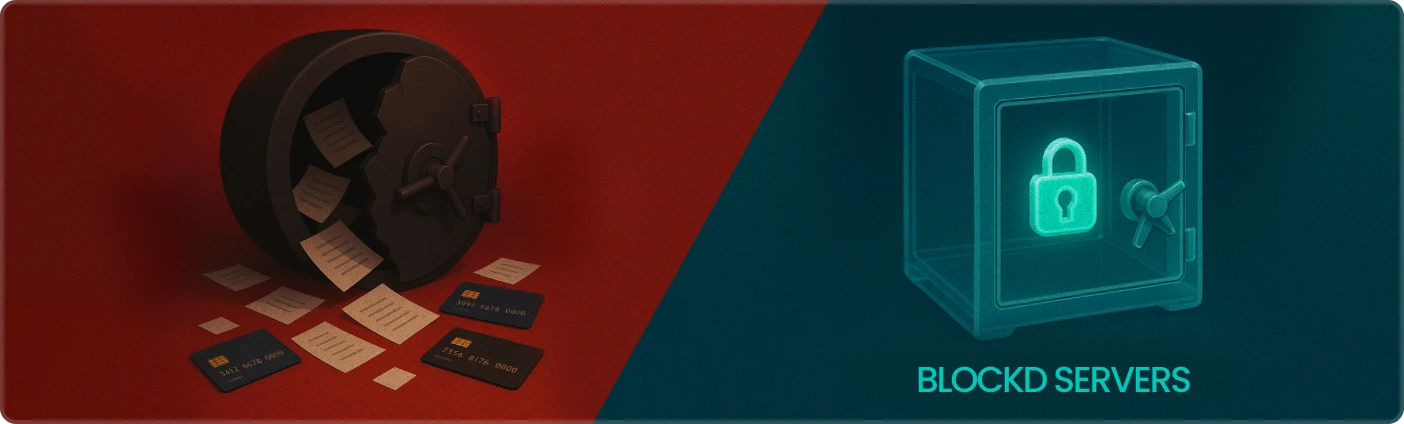
Most “secure” messengers tie your account to a phone number or email, and often to a KYC trail that can be legally compelled or commercially exploited. That is not anonymity. That is a thin privacy veneer on top of an identity-linked infrastructure. If an adversary can subpoena or purchase telecom data, they can map your relationships even if your messages are encrypted.
We take the opposite approach. We do not require a phone number, email, or any KYC. Your identifier in our system is not designed to be a proxy for your legal identity. When combined with onion routing and unlinked metadata, this means your use of the platform cannot be trivially tied back to you through third-party records, telecom logs, or centralized identity providers.
7. Onion Routing in the Real World: Censorship, Crackdowns, and Resilience
Onion routing is not an academic exercise. It is battle tested in some of the harshest network environments on the planet. When governments attempt to shut down parts of the internet or block specific platforms, Tor and related tools provide one of the few viable paths around those controls. This is not theory—it is daily reality for millions.
Snowflake, for example, is a pluggable transport that runs on top of Onion routing infrastructure to bypass censorship. During June 2025, Iran experienced a near-total shutdown, and Snowflake usage spiked before the disruption. Turkmenistan reached around 1,000 concurrent Snowflake users by the end of that month. These numbers reflect a simple truth: untraceable paths become critical when states decide that certain speech should disappear.
Did You Know?
About 2.5 million daily Tor users are estimated globally as of 2025, showing that onion routing is already a mainstream backbone for anonymous and untraceable communication.
8. The DarkMesh Approach: Onion-Style Routing Integrated With Messaging
Our DarkMesh protocol is built around the same core principles that make onion routing powerful. All traffic is relayed through multiple anonymous nodes, and encryption layers are peeled away at each hop. No single relay can see both sender and receiver. That is non-negotiable for us. Privacy is not a bolt-on feature—it is the foundation of how we architect communication.
We take it further by combining zero-knowledge encryption of identities, messages, and metadata with multi-hop routing. Your account is owned and controlled by you, with passkeys stored on your device and seed phrase recovery, not by a central authority that can be compelled to identify you. When messages are at rest, they are re-encrypted until you reopen the conversation, closing common attack windows that many apps ignore.
9. Configurable Routing and Storage: User Control Over Anonymity
Most platforms treat routing and storage as internal decisions. We do not. We allow messages to be sent either through our own servers or through the Tor network—something no other mainstream messenger currently offers. That gives you the ability to choose stronger anonymity when you need it, instead of being locked into a single trust model.
On the storage side, you decide where your data lives—or if it exists at all. Messages can stay on-device only, be stored ephemerally, use Blockd cloud, or, in the future, live on user-owned infrastructure such as the ICP blockchain. Pair that with onion-style routing and you get something traditional messengers cannot offer: configurable anonymity that adapts to your threat model, not ours.
10. Why Privacy Is a Human Right, Not Paranoia
In today’s world, free speech and privacy are under direct and indirect attack. Surveillance capitalism treats your behavior as raw material to be harvested, profiled, and sold. Governments lean on telecoms and centralized platforms to quietly expand monitoring capabilities. The “nothing to hide” argument collapses the moment you realize that power operates through information asymmetry, not only through visible censorship.
Onion routing is part of a broader stance: your right to think, speak, and associate without being tracked is non-negotiable. It is not about hiding criminal activity—it is about protecting the space where dissent, creativity, and personal growth happen. When we design for untraceable communication, we are not indulging paranoia. We are restoring a basic human right that the digital ecosystem systematically eroded.
Conclusion
Onion routing solves the part of privacy that encryption ignores: the metadata trail that exposes who you are, who you talk to, and how you live. By analyzing its benefits, the conclusion is clear. If you rely only on encrypted, identity-linked apps, you are still broadcasting your life to anyone with access to network logs and corporate databases.
We build around a different premise: anonymity is not optional if you care about real privacy. That is why we embrace onion-style routing, integrate Tor, reject phone numbers and KYC, and put routing and storage choices back into your hands.
Speak freely. Stay private. Treat untraceable communication as the default, not the exception.

_thumb.png)
.png)


.png)
.png)
.png)
.png)
.png)