Top Features to Look for in Secure Messengers
Our conversations are more at risk than ever in today's digital world. Regular messaging apps often put cool features ahead of privacy, which can put your private information at risk. Secure messaging has become really important as privacy concerns grow worldwide, with more government surveillance, data breaches happening more often, and companies getting better at collecting and analyzing our data.

Essential Secure Messenger Features
- End-to-End Encryption: Ensures only the sender and recipient can read messages
- Anonymous Account Creation: No phone number or email verification requirements
- Metadata Protection: Minimizes digital footprints beyond message content
- Open-Source Code: Allows independent security verification
- Self-Destructing Messages: Automatic deletion after specified timeframes
- Forward Secrecy: Protects past communications if keys are compromised
- Secure File Sharing: Protected transmission of documents and media
- No Data Collection: Minimal or zero user data retention policies
Introduction: The Growing Importance of Secure Communication
Our conversations are more at risk than ever in today's digital world. Regular messaging apps often put cool features ahead of privacy, which can put your private information at risk. Secure messaging has become really important as privacy concerns grow worldwide, with more government surveillance, data breaches happening more often, and companies getting better at collecting and analyzing our data.
Most popular messaging apps make you use your phone number or email when you sign up. This creates a direct link between your messages and who you really are. That’s a big privacy problem that many people don't even notice. This connection leaves a digital trail that can be tracked and potentially used by different groups like the companies themselves, advertisers, or government agencies.
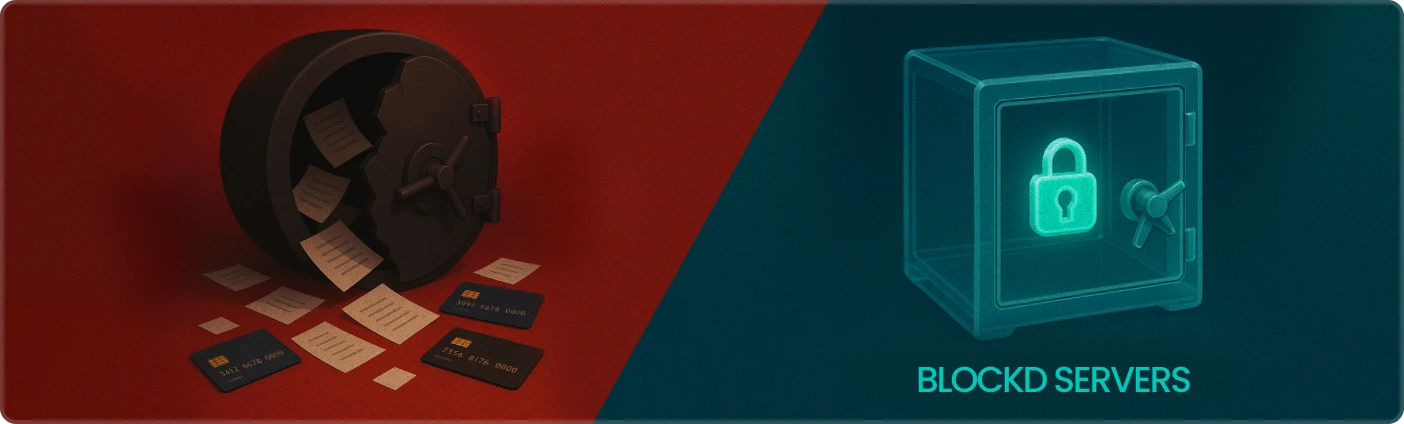
At Blockd, we believe that real privacy needs anonymity. While many messaging apps say they offer “security,” they still make you verify who you are with your email or phone number. This creates a permanent link between your real identity and your messages—which goes against true privacy. That requirement creates weaknesses that even the strongest encryption can't fix, because it connects your messages to who you are from the very start.
In this article, we'll look at the key features that truly secure messaging apps should have, focusing on why anonymity is so important for protecting your communications. We'll also show how Blockd addresses these privacy concerns with our approach to secure messaging. By understanding these security elements, you'll be better able to choose messaging apps that really protect your privacy in a world where more and more people are watching what we do online.
End-to-End Encryption: The Foundation of Secure Messaging
End-to-end encryption (E2EE) is the basic building block of any truly secure messaging app. This encryption makes sure that only the people you're talking to can read your messages, keeping them safe from the service provider, hackers, government agencies, or anyone else. Unlike regular encryption that might only protect messages while they're being sent or allow companies to see content on their servers, E2EE protects your message from the moment you create it until the moment your contact reads it.
How End-to-End Encryption Works
When you send a message using E2EE, it gets scrambled on your device before it's sent. The message stays scrambled as it travels through servers and networks, only getting unscrambled when it reaches your friend's device. This creates a secure tunnel where even the company running the service can't see what you're saying. The encryption uses complex math that would take incredibly powerful computers to break, making good E2EE basically uncrackable with today's technology—even by the most advanced attackers.
Technical Note:
Proper E2EE implementations use public-key cryptography, where each user has both public and private keys. Messages are encrypted using the recipient's public key and can only be decrypted using their corresponding private key, which never leaves their device. This asymmetric encryption system ensures that even if a service provider wanted to access message content, they would be mathematically unable to do so without the private keys stored only on user devices.
Beyond Basic Encryption
While many messaging apps say they use encryption, not all do it equally well:
- Look for verified implementations
The encryption should be well-documented and checked by independent security experts. Secret or proprietary encryption methods should make you suspicious, as they haven't been thoroughly examined by outside experts who might find problems or backdoors. - Encryption by default
The best secure messengers apply E2EE automatically to all communications without requiring users to enable it manually. Opt-in encryption features are frequently left unused, leaving messages vulnerable because users either forget or don't understand how to activate these protections. - Group chat encryption
Make sure the service provides the same level of encryption for group conversations as it does for one-on-one chats. Some platforms weaken encryption protections for multi-user conversations, creating a significant security vulnerability that many users aren't aware of when communicating in groups.
At Blockd, we implement robust end-to-end encryption across all communications. But we also recognize that encryption alone isn't enough for complete privacy. The metadata surrounding your messages—who you're talking to, when, and how often—can still reveal sensitive information about your communications even when the content remains encrypted. This contextual data can often be just as revealing as message content itself, allowing sophisticated analysis to infer relationships, behaviors, and even the general nature of conversations.
That’s why Blockd goes beyond just encrypting message content to address the broader privacy picture, including metadata protection and anonymous account creation. We view encryption as a necessary but insufficient component of a truly private messaging system, and have designed our platform to address the full spectrum of privacy vulnerabilities that exist in digital communications.
Anonymous Account Creation: The Missing Piece in Messaging Privacy
One of the most overlooked parts of messaging security is how you create an account in the first place. Most popular messaging apps make you verify who you are with a phone number or email, creating a permanent link between your real identity and your messages. This identification requirement creates a basic privacy problem that exists before you even send a single message, weakening even the strongest encryption and security measures that might be used later.
The Problem with Mandatory Identification
When a messaging app requires your phone number or email, it creates several privacy vulnerabilities:
- Identity linkage
Your communications are permanently tied to your real-world identity, creating a persistent connection that can be exploited for surveillance, tracking, or identification. This linkage undermines the very concept of private communication by establishing a verifiable connection to your personal identity from the outset. - Cross-platform tracking
Your identity can be correlated across multiple services, allowing companies and potentially governments to build comprehensive profiles of your digital activities. Phone numbers and email addresses serve as universal identifiers that enable data aggregation across different platforms and services. - Vulnerability to data breaches
If the service is compromised, your personal information is exposed, potentially leading to identity theft, targeted phishing, or other security risks. Once this connection between your identity and communications is established, it creates a valuable target for malicious actors. - Government access
It becomes easier for authorities to request or access your communication records, as they can specifically identify your account through your personal identifiers. This creates a straightforward path for legal demands targeting your specific communications.
Privacy Insight:
Even if your messages are encrypted, the requirement to link your account to personal identifiers creates a fundamental privacy weakness. Your metadata—who you talk to and when—remains vulnerable to collection and analysis. Security researchers have repeatedly demonstrated that metadata analysis can reveal surprisingly detailed information about individuals' lives, relationships, and activities even without access to message content.
True Anonymity as a Privacy Foundation
At Blockd, we've designed our platform with the understanding that anonymity is a prerequisite for genuine privacy. Our approach differs fundamentally from other messaging services:
- No phone verification requirement
Create an account without linking to your real-world identity, eliminating the foundational privacy vulnerability present in most messaging platforms. - No email verification needed
Avoid the privacy pitfalls of email-based systems, which still create persistent identity linkages that can be tracked and potentially compromised. - No KYC procedures
Unlike many “secure” platforms that still require identity verification, we recognize that true privacy begins with the ability to communicate without mandatory identification. - Separation of identity layers
Keep your digital communications separate from your personal identity, creating a genuine privacy barrier that protects against surveillance, tracking, and identification.
This approach addresses a critical vulnerability that even well-encrypted platforms typically overlook. By eliminating the requirement to link your account to personal identifiers, we provide a foundation for truly private communication that other platforms simply cannot match.
Metadata Protection: Securing the Context of Your Communications
While encryption protects what's in your messages, metadata—information about your communication patterns—can reveal a lot of sensitive details. Good secure messengers must address this often-overlooked part of communication privacy. Metadata analysis has become very sophisticated, allowing organizations with access to this information to build detailed profiles of people's behaviors, relationships, and activities even without seeing what's in their messages.
Understanding Metadata Vulnerabilities
Metadata includes information such as:
- Who you communicate with, creating a detailed map of your personal and professional relationships
- When communications occur, establishing patterns that can indicate sleep schedules, work habits, major events, or life changes
- How frequently you exchange messages, which can signal the intensity and nature of relationships or evolving situations
- Your IP address and location, potentially revealing your physical whereabouts, home and work locations, and travel patterns
- Device information, which can be used for fingerprinting and cross-service tracking
- Message sizes and timing patterns, which can sometimes be analyzed to infer the general nature of your communications
Even without access to message content, metadata analysis can reveal relationships, behaviors, and sensitive activities. For example, frequent communications with a medical specialist could indicate health issues, while messages to a financial advisor might suggest significant financial decisions. Former NSA Director Michael Hayden famously remarked, “We kill people based on metadata,” highlighting just how revealing this information can be.
Advanced Metadata Protection Techniques
Look for these features in secure messaging applications:
- Minimal data retention
The service should store as little metadata as technically possible, with aggressive deletion schedules for any operational data that must be temporarily retained. Ideally, systems are designed not to require metadata storage in the first place. - IP address concealment
Protection from location tracking through network identifiers, using techniques like proxy routing, VPN integration, or Tor-like systems that mask the true origin of communications. - Traffic obfuscation
Techniques that mask communication patterns and timing—such as padding messages to standardized sizes, introducing timing variations, or generating cover traffic—make it harder to perform traffic analysis. - Anonymous routing
Similar to Tor, routing messages through multiple points to obscure origins and destinations, creating layers of separation between sender and recipient. - Decentralized architecture
Distributing data across multiple servers rather than centralizing it, reducing the impact of server compromises and making comprehensive metadata collection more difficult.
Privacy Advantage:
When combined with anonymous account creation, robust metadata protection creates a significantly more private communication environment than encryption alone can provide. This multi-layered approach addresses both content security and contextual privacy.
At Blockd, we've implemented comprehensive metadata protection strategies that work alongside our anonymous account system and encryption protocols. This multi-layered approach addresses the full spectrum of privacy vulnerabilities that exist in digital communications, protecting not just what you say, but the context around how, when, and with whom you communicate.
Open-Source Code: Transparency and Security Verification
Being able to check security claims is really important when choosing messaging apps. Open-source applications let security researchers and the community look at the code for weaknesses, backdoors, or privacy issues. This transparency creates accountability that closed-source applications simply cannot match, as security claims can be verified rather than taken on faith.
Why Open Source Matters for Security
Closed-source applications require users to trust the developer's security claims without the ability to verify them. This creates several issues:
- Security through obscurity
Relying on code secrecy rather than proven security practices—an approach widely rejected by security experts as fundamentally flawed. - Undetected backdoors
No way to confirm the absence of intentional access points, whether created for government agencies, the company itself, or inserted by malicious insiders. - Delayed vulnerability detection
Security flaws may remain undiscovered longer, as the limited number of developers with access to the code reduces the likelihood of identifying and fixing vulnerabilities quickly. - Limited expert review
Only internal developers can assess security implementations, preventing independent evaluation by specialized security researchers.
Security Principle:
“Given enough eyeballs, all bugs are shallow.” This idea, known as Linus's Law, highlights how open-source development allows more people to identify and fix security issues. The collaborative nature of open-source development typically results in more robust and thoroughly tested code than closed development approaches.
What to Look for in Open-Source Messaging Apps
When evaluating open-source secure messengers, consider:
- Active development community
Regular updates, multiple contributors, and responsive maintenance indicate ongoing security improvements. - Independent security audits
Third-party reviews by professional security firms provide additional validation beyond community review. - Transparent bug reporting
Public issue trackers and clear security disclosure policies show a commitment to addressing vulnerabilities promptly. - Clear documentation
Well-documented security protocols help users and researchers understand how security features work. - Appropriate licensing
Licenses that allow security research and community contribution while protecting users and the project’s integrity.
At Blockd, we believe in the security advantages of transparency. Our commitment means users don't have to simply trust our claims—they can verify them through independent code review. This approach builds genuine trust through verification rather than marketing.
Self-Destructing Messages: Controlling Your Digital Footprint
The fact that digital messages can last forever creates big privacy risks. Self-destructing or disappearing messages give users control over how long their communications exist, reducing the risk window for sensitive information. This feature recognizes that different messages need different levels of security, and that keeping everything forever is almost always a bad idea for privacy.
Benefits of Message Expiration Features
Self-destructing messages offer several advantages:
- Reduced data exposure window
Limits how long sensitive information exists, decreasing the timeframe during which messages could be compromised. - Protection against device compromise
If a device is later stolen or accessed, expired messages are already gone, preventing unauthorized access to historical communications. - Forward privacy
Prevents future access to past communications, ensuring that even if security is compromised later, earlier sensitive exchanges remain protected. - Minimized data collection
Reduces the amount of data platforms can store, limiting the impact of server breaches or policy changes.
Effective Implementation of Self-Destructing Messages
Look for disappearing-message implementations that offer:
- User-defined expiration times
Flexibility to set different timeframes based on sensitivity—from minutes to days or more. - Server-side deletion
Ensures messages are removed from all storage, not just hidden from the app view. - Screenshot detection (where possible)
Notifications when recipients attempt to capture disappearing content, giving you awareness of potential policy violations. - Verification mechanisms
Some indication or logging that messages were actually deleted as scheduled. - Default expiration options
Ability to set automatic expiration for all new conversations, making privacy the default.
Security Note:
While self-destructing messages significantly enhance privacy, they cannot prevent determined recipients from capturing content with external cameras or specialized tools. They work best as part of a comprehensive security approach and with trusted recipients.
At Blockd, our approach is designed to give users maximum flexibility while maintaining strong security defaults. Combined with anonymous account creation and metadata protection, self-destructing messages create a significantly more private communication environment.
Forward Secrecy: Protecting Past Communications
Forward secrecy (sometimes called perfect forward secrecy) is an important but often overlooked security feature that protects your past messages even if encryption keys are later stolen. This critical protection ensures that a security breach today doesn't expose messages from yesterday.
How Forward Secrecy Works
Traditional encryption systems often use the same keys for long periods. If those keys are compromised, all messages encrypted with them become vulnerable. Forward secrecy improves on this by:
- Generating temporary session keys
Each conversation—or even each message—uses distinct encryption keys, rather than one long-term static key. - Regularly rotating encryption keys
Keys change frequently, even within ongoing conversations, reducing the amount of data protected by any single key. - Discarding old keys
Keys are destroyed after use, so they can't be used to decrypt past communications later. - Creating independent encryption sessions
Different sessions are cryptographically independent, so compromising one doesn’t automatically compromise others.
Technical Benefit:
With proper forward secrecy, an attacker who gains access to a device or keys today cannot decrypt previously sent messages, significantly limiting the damage of security breaches.
Implementing Strong Forward Secrecy
When evaluating secure messengers, look for:
- Documented key rotation protocols
Clear explanations of how and when keys are generated, used, and destroyed. - Automatic implementation
Forward secrecy should be built in and always on—no user configuration required. - Independent session security
A compromise in one conversation should not impact other sessions. - Minimal key retention
Well-defined lifecycle management for cryptographic keys, with fast and verifiable destruction.
At Blockd, we implement robust forward secrecy as part of our core security architecture. This protection works alongside our other features to ensure your communications remain private not just now, but in the future—even if something goes wrong later.
Secure File Sharing: Beyond Text Messages
Secure communication goes beyond text to include the documents, images, and media files we share every day. A truly secure messenger must provide protected file sharing with the same level of security applied to text communications.
Critical Security Features for File Sharing
When evaluating file sharing in secure messengers, look for:
- End-to-end encrypted transfers
Files should be encrypted before they leave your device, staying encrypted in transit and on any server storage. - Metadata protection for shared files
Protection for filenames, sizes, and types where possible, to avoid leaking information about the content. - Secure storage
If files are stored in the cloud, they should remain encrypted with keys that the provider cannot access (zero-knowledge design). - Expiring file links or access
Ability to control how long files remain accessible, especially for sensitive content. - Integrity and authenticity verification
Mechanisms (like checksums or signatures) to ensure files haven’t been tampered with.
Balancing Security and Usability
Well-designed secure file sharing should:
- Make sharing simple and intuitive
- Support common file formats and realistic size limits
- Offer safe preview options
- Let users decide what gets saved locally versus viewed temporarily
Security Consideration:
File sharing introduces additional complexities compared to text—larger payloads, diverse formats, and potential for malware. Strong, thoughtful implementation is critical for maintaining security without sacrificing usability.
Blockd was designed with the understanding that documents and media often contain even more sensitive information than text. Our approach applies the same rigorous security standards to all types of shared content, not just messages.
No Data Collection: Minimizing Digital Footprints
A basic part of secure messaging is collecting and storing as little user data as possible. The strongest privacy protection comes from services that simply don't collect data in the first place. This “data minimization” approach is very different from the typical “collect everything” mindset of most digital platforms.
The Problem with Excessive Data Collection
Many messaging platforms collect extensive user data for reasons such as:
- Advertising and monetization
Building user profiles for targeted ads, which conflicts directly with true privacy. - Feature development
Analyzing usage patterns, often collecting far more information than is actually necessary. - Content moderation
Monitoring for policy violations, which may require access to content or detailed metadata. - Legal compliance
Retaining data in case it's requested later by authorities.
This creates serious privacy risks:
- Data breach vulnerability – The more data stored, the more attractive and damaging a breach becomes
- Function creep – Data collected for one purpose gets repurposed for others over time
- Compelled disclosure – Companies can be forced to hand over whatever data they hold
- Internal misuse – Employees or insiders might access or abuse user information
Privacy Principle:
The most secure data is data that doesn’t exist. No matter how strong a company’s defenses are, data that isn’t collected can never be leaked, hacked, or subpoenaed.
Evaluating Data Collection Policies
When assessing secure messengers, look for:
- Minimal data collection by design
Only gathering what’s strictly necessary for the service to function. - Clear, specific privacy policies
No vague language; explicit detail on what is and isn’t collected. - Local storage wherever possible
Keeping data on your device instead of centralized servers. - Anonymous or aggregate analytics (if any)
No ability to tie analytics back to specific individuals. - Regular automatic data deletion
Defined retention limits and verifiable deletion practices.
At Blockd, we’ve designed our systems to operate effectively without requiring unnecessary personal information, creating a fundamentally more private communication environment than platforms that rely on heavy data collection.
Conclusion: The Future of Truly Secure Messaging
As digital privacy concerns continue to grow, the need for genuinely secure messaging platforms becomes increasingly critical. The features we've explored represent the essential components of messaging applications that prioritize real security and privacy rather than just claiming to do so.
The Critical Role of Anonymity
Throughout this article, one theme stands out: true privacy requires anonymity. Many messaging platforms claim to be “secure,” but still insist on linking your account to your phone number or email. That single design choice creates a permanent connection between your real identity and your communications, undermining everything that comes after.
A Comprehensive Security Approach
The most effective secure messengers implement multiple layers of protection:
- Strong encryption to protect content
- Anonymous account creation to avoid identity linkage
- Metadata protection to hide the “who, when, and how often”
- Open-source code for verifiable security
- Self-destructing messages to control your digital footprint over time
- Forward secrecy to protect past messages from future key compromise
- Secure file sharing to extend protection beyond text
- Minimal data collection to reduce what can ever be exposed
In today's world—with expansive surveillance, constant data harvesting, and increasingly powerful analytics—being anonymous isn't paranoia. It's a requirement for real privacy.
We’ve built Blockd with the understanding that comprehensive privacy requires addressing all these aspects, not just implementing basic encryption. Our approach represents a fundamental shift from conventional messaging platforms, creating a communication environment where privacy isn't just a bullet point in a feature list—it’s the foundation of the entire system.
Key Takeaway
When choosing a secure messenger, look beyond basic “end-to-end encryption” marketing claims and examine the full privacy picture:
- Does it require your phone number or email?
- Does it minimize or aggressively collect metadata?
- Is the code open to independent verification?
- Does it prioritize data minimization instead of data harvesting?
The strongest privacy protection comes from platforms that address the entire spectrum of vulnerabilities—identity, metadata, content, files, and data retention—rather than focusing on one isolated feature.

_thumb.png)
.png)

.png)
.png)
.png)
.png)
