Inside DarkMesh: The Hidden Architecture That Makes Blockd Users Invisible Online
34% of Americans experienced at least one data breach in the past year, and most of those incidents had nothing to do with weak encryption—they were about visibility and data trails. Blockd's DarkMesh Protocol tackles that problem directly by aiming to make you <em>hard to see</em>, not just hard to read. Instead of stopping at end-to-end encryption, DarkMesh combines zero-knowledge design, Tor routing, and decentralized infrastructure so that no one—including Blockd—can easily connect who you are with what you say. In a world where metadata leakage exposes nearly everything about you, true privacy requires true anonymity—and that starts with not linking your identity to your communications in the first place.
.png)
34% of Americans experienced at least one data breach in the past year, and most of those incidents had nothing to do with weak encryption—they were about visibility and data trails. Blockd's DarkMesh Protocol tackles that problem directly by aiming to make you hard to see, not just hard to read. Instead of stopping at end-to-end encryption, DarkMesh combines zero-knowledge design, Tor routing, and decentralized infrastructure so that no one—including Blockd—can easily connect who you are with what you say. In a world where metadata leakage exposes nearly everything about you, true privacy requires true anonymity—and that starts with not linking your identity to your communications in the first place.
Key Takeaways
QuestionAnswerHow is DarkMesh different from regular encrypted messaging?Traditional messengers encrypt content but still expose metadata like who you talk to and when. DarkMesh, described in detail in Encryption Alone Isn't Enough—Here's What Blockd Does Differently, is designed to minimize or detach that metadata from your identity.What are the three pillars of DarkMesh?Blockd defines DarkMesh as built on zero-knowledge architecture, Tor network routing, and decentralized infrastructure—an approach explored in depth in How Blockd Protects You from Everyone (Even Us).Does Blockd require a phone number or email?No. Unlike virtually every other messaging app, Blockd requires no phone number, no email, and no KYC verification of any kind. As explained in Your Metadata Is Giving You Away—Here's How Blockd Keeps You Truly Anonymous, this eliminates the permanent link between your real-world identity and your communications that makes other platforms vulnerable to surveillance and data breaches.Why is anonymity essential for privacy today?With the extent of metadata leakage from modern communication—who you talk to, when, how often, from where—encryption alone cannot protect you. Your metadata trail reveals your relationships, habits, and movements. True privacy now requires true anonymity: ensuring that trail cannot be linked back to your real-world identity.Can I control where my messages are stored?Yes. Blockd offers configurable storage: on-device only, temporary/ephemeral, Blockd cloud, and—in the future—user-owned options like ICP blockchain. Storage configurability is a core theme across Top Techniques for Ensuring Online Anonymity.How does Blockd route messages to keep me anonymous?Messages can be routed via Blockd servers or directly through the actual Tor network—not a proprietary imitation. No other mainstream messenger currently combines this level of routing choice with end-to-end encryption and an identity-free account model. The DarkMesh routing model is introduced in Best Encryption Techniques for Communication.Is Blockd open-source?Not currently. Blockd is keeping code closed in the early stage to avoid exposing immature components to attack. Open-sourcing may be considered in the future, but it is not a short-term plan.Where can I follow Blockd's latest privacy research?The company maintains an active privacy-focused publication at Blockd Signals, covering metadata, anonymity, DarkMesh, and practical privacy strategies.
Why “Invisible, Not Just Encrypted” Matters in 2025
Most secure messaging tools focus on encryption of content but leave your metadata exposed—who you talk to, when, how often, and from where. As the Blockd team repeatedly stresses, that metadata can be enough to reconstruct your social graph, predict behavior, or infer sensitive details without ever breaking encryption.
DarkMesh is Blockd's answer to this gap. Instead of adding another encrypted chat app to a crowded field, it aims to change the architecture of communication by routing through the actual Tor network, minimizing data retention, and removing identity anchors like phone numbers and email addresses entirely. The result is a system designed so that even if messages are secure, their surrounding metadata is also extremely hard to weaponize—because that metadata cannot be linked back to your real-world identity.
The DarkMesh Protocol: Architecture for Anonymity
Blockd describes its DarkMesh Protocol as resting on three pillars: zero-knowledge architecture, Tor network routing, and decentralized infrastructure. Each pillar targets a different attack surface—data at rest, data in transit, and control over the network.
In DarkMesh, messages and account secrets are designed so that Blockd servers cannot see plaintext. At the same time, routing across Tor relays obscures IP addresses and makes it difficult for observers to determine who is talking to whom. Decentralized relays help avoid single points of failure or central logs that could be correlated or seized.
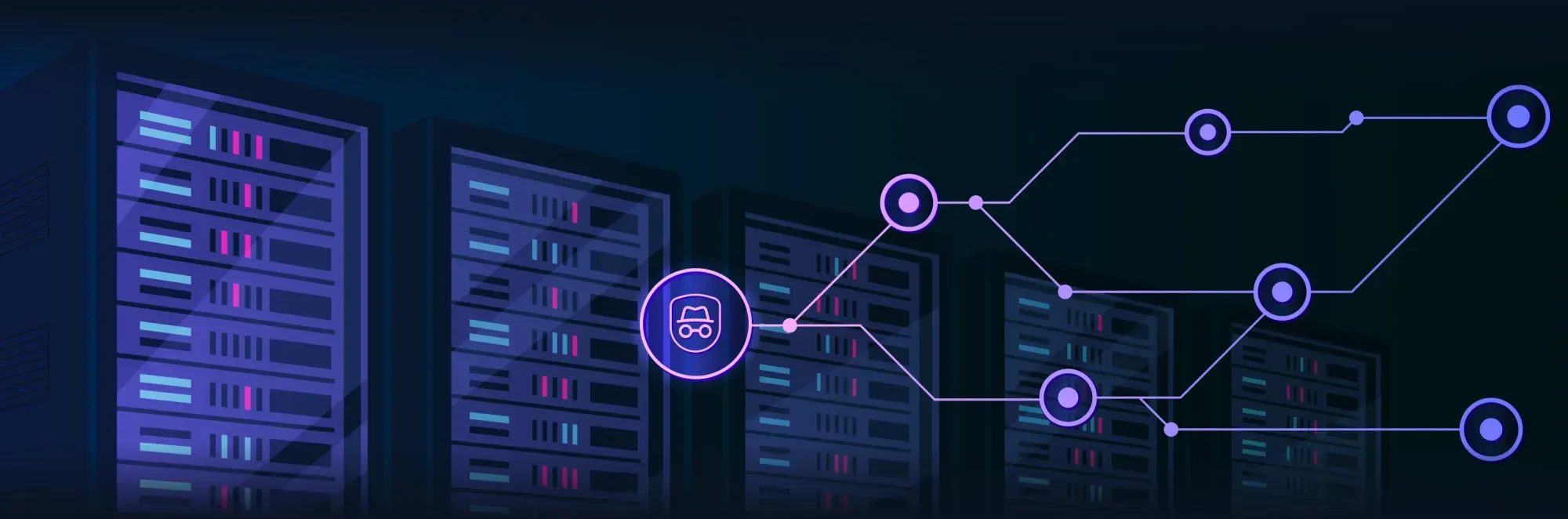
Built on the Real Tor Network, Not an Imitation
Unlike some messaging platforms that implement proprietary “onion-style” routing, Blockd integrates with the actual, battle-tested Tor network, which has roughly 8,000 relays and millions of daily users. This gives DarkMesh a mature, well-scrutinized anonymity layer rather than a small, easily analyzed private network that a single company controls.
This design decision matters significantly. A proprietary anonymity network controlled by a single company can itself become a centralized risk—subject to pressure, compromise, or analysis. By leveraging Tor, DarkMesh benefits from a globally distributed infrastructure and from the rigorous scrutiny applied to Tor’s core design over many years.
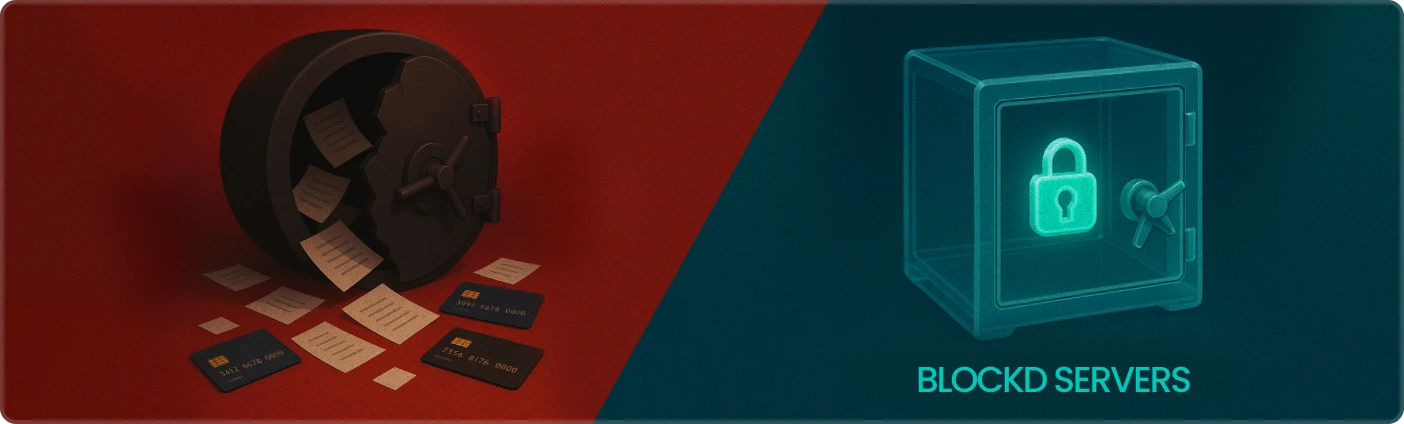
Zero-Knowledge by Design: Why Blockd Can’t See Your Data
Zero-knowledge architecture means Blockd's servers operate without access to your plaintext messages or your long-term secrets. Cryptographic keys remain on your devices, and server interaction is limited to passing encrypted blobs and routing metadata that is already minimized.
Critically, this is not only about content encryption. The platform is structured so that even if servers were compromised, there would be nothing meaningful to hand over. No master decryption key, no centralized social graph tied to phone numbers, no email registry linking accounts to identities, and no “backdoor” recovery channel. This is what separates zero-knowledge architecture from mere end-to-end encryption.
Passkeys, Seed Phrases, and Quantum-Resistant Crypto
Blockd uses passkeys stored on-device instead of traditional passwords and SMS-based 2FA. Passkeys are superior to passwords and conventional two-factor authentication because they avoid credential databases entirely, reduce phishing risk, and eliminate dependency on phone numbers or email addresses that link your account to your real-world identity.
Account recovery uses a seed phrase, similar to modern crypto wallets, so users retain control without central password reset channels that would require identity verification. Under the hood, Blockd adopts a quantum-resistant NaCl-based algorithm for message encryption and securely re-encrypts messages until you reopen a conversation, limiting long-term exposure even on your own device.
Did You Know?
69% of Americans say privacy policies are just something to get past to use a product or service—highlighting why architecture, not legal text, is becoming the foundation of real privacy.
Tor Routing and Metadata Minimization: Hiding the Social Graph
Most messaging apps, even highly respected ones like Signal, still leave an unavoidable metadata trail: at minimum, a phone number and a record that some identifier contacted another at a given time. Blockd's DarkMesh takes a fundamentally different approach by eliminating phone numbers and email entirely—no KYC verification of any kind—and routing traffic over the actual Tor network.
With Tor onion routing, no single relay knows both who you are and where your traffic is going. Combined with Blockd's decision not to tie accounts to telecom identifiers, email addresses, or any KYC data, this makes it extremely difficult to map conversations back to real-world identities. This is what anonymity-first architecture looks like in practice.
Routing Modes: Blockd Servers or Pure Tor
Blockd offers configurable routing modes. Users can choose to send messages through Blockd’s own infrastructure for performance, or push them through the Tor network to maximize anonymity. No other messaging app currently combines this level of routing choice with end-to-end encryption and an identity-free account model.
This configurability is key to DarkMesh: instead of assuming every user has the same risk profile, it lets you decide when to prioritize speed and when to emphasize invisibility. Your threat model determines your routing choice.
Configurable Storage: From On-Device Only to User-Owned Chains
DarkMesh isn't just about how messages move across the network; it's also about where they live. Blockd provides several storage options: strict on-device storage, ephemeral/temporary storage, Blockd-hosted cloud, and—planned for the future—user-owned storage such as the ICP blockchain.
On-device and ephemeral modes are particularly relevant for high-risk scenarios. They ensure that once messages are delivered and read, there is little or no long-term footprint on any server, and even your device holds only what is necessary.
Re-Encryption Until You Reopen a Conversation
Blockd adds another layer by securely re-encrypting messages on-device when conversations are closed, using the quantum-resistant NaCl-based algorithm. That means even locally cached data is hardened, and a snapshot of your device reveals less than in many popular apps that leave plaintext or easily recoverable content in memory.
Combined with flexible storage locations, this approach turns message history into something you manage deliberately instead of an unchangeable archive kept indefinitely by a centralized provider.
The Metadata Problem: Why Encryption Alone Fails
The Blockd blog repeatedly emphasizes a critical point: encryption protects what you say, but not that you said it, or to whom, or when. Those pieces—your metadata—can be enough to infer medical issues, political leanings, travel habits, and more.
Posts such as “Your Metadata Is Giving You Away” detail how governments can access telecom metadata and how data brokers construct behavioral profiles that persist long after specific messages are gone. DarkMesh is specifically designed to shrink or scramble this metadata footprint—but critically, it also ensures that whatever metadata does exist cannot be linked back to your real-world identity because no such link was ever created.
The Phone Number and Cross-Platform Tracking Problem
Phone numbers have become global tracking identifiers, linking together messaging, advertising, payments, and account recovery across platforms and services. Email addresses serve a similar function. When you sign up for a messaging app with your phone number or email, you create a permanent connection between that account and your broader digital identity—a connection that can be queried, sold, subpoenaed, or breached years later.
Blockd's decision to require no phone numbers, no email addresses, and no KYC verification of any kind is a deliberate architectural choice to sever that linking mechanism entirely. Without those anchors, and with Tor-based routing, a Blockd account becomes far harder to connect to your broader digital footprint—even for entities with significant surveillance or data-broker capabilities. In today's world, where your metadata trail reveals nearly everything about you, this kind of anonymity isn't a luxury; it's a prerequisite for genuine privacy.
Did You Know?
71% of Americans are concerned that government surveillance could be used to target political opponents or suppress dissent—one reason metadata protection and true anonymity are becoming as important as encryption itself.
Threat Modeling and the “Nothing to Hide” Fallacy
Blockd's writing on privacy underlines that “nothing to hide” is not a serious argument in a world of pervasive data collection. Personal data can be misinterpreted, deanonymized, or repurposed in ways you cannot predict today—by employers, insurers, governments, or criminals.
Threat modeling, as discussed in “How to Maximize Privacy Online in 2025,” helps you identify who might care about your data, what capabilities they have, and what consequences a leak or correlation could have. DarkMesh is one tool in that broader threat model, focused on making communication patterns opaque and ensuring your communications cannot be traced back to you.
Living Beyond the Data Shadow
“Living beyond the data shadow,” as one Blockd article phrases it, means reducing the amount of data collected about you by default. It is less about hiding from everything and more about choosing what is visible, to whom, and for how long.
DarkMesh contributes to that goal by decoupling communication from identity at the most fundamental level—no phone number, no email, no KYC ever links your account to you. Combined with strong cryptography and Tor routing, even Blockd's own infrastructure has as little insight as possible into your relationships and behavior.
Blockd vs Traditional Encrypted Apps: A Practical Comparison
Signal has become the reference point for secure messaging, and deservedly so for its strong end-to-end encryption and modern protocol design. However, it still relies on phone numbers, centralized infrastructure, and traditional metadata exposure to telecom providers.
Blockd, by contrast, is positioning DarkMesh as an option when you need a higher level of anonymity—no phone numbers, no email, no KYC, Tor routing, and configurable storage. It is less a replacement for all everyday messaging and more a specialized tool for contexts where invisibility matters as much as encryption.
FeatureTypical Encrypted App (e.g., Signal)Blockd with DarkMeshIdentity RequirementPhone number requiredNo phone, no email, no KYCNetwork RoutingStandard internet routingChoice of Blockd servers or actual Tor networkStorage OptionsPrimarily device + vendor serversOn-device, ephemeral, Blockd cloud, future user-owned blockchainAccount RecoveryPhone or email resetSeed phrase; no central resetAuthenticationPasswords, SMS 2FAOn-device passkeys (superior to passwords/2FA)Open Source StatusGenerally open sourceCurrently closed-source; may be considered later
Why Blockd Isn’t Open Source (Yet)—and What That Means
Many privacy advocates strongly prefer open-source software for transparency, and Blockd openly acknowledges this in its blog. At the same time, the company has chosen not to release its code at this early stage, to avoid exposing immature components to attackers before they are fully hardened.
This is a trade-off: users must rely on architectural descriptions, external audits (where available), and the strength of standard cryptographic libraries like NaCl, rather than inspecting every line of DarkMesh-related code themselves.
Balancing Transparency, Security, and Development Pace
Blockd notes that open-sourcing may be considered in the future, but it is not a short-term plan. For now, DarkMesh relies on open, well-understood primitives (such as the actual Tor network and NaCl) while keeping the surrounding implementation closed.
For organizations evaluating Blockd, this means weighing the benefits of DarkMesh's architectural anonymity against the limitations of not being able to conduct full independent code review—at least until or unless the codebase is opened later.
Using DarkMesh in a Layered Privacy Strategy
Blockd itself emphasizes that DarkMesh is one part of a layered privacy strategy, not a silver bullet. Articles like “Top Techniques for Ensuring Online Anonymity” and “How to Maximize Privacy Online in 2025” highlight the continued importance of secure browsers, privacy-focused operating systems, and good digital hygiene.
In that larger toolkit, DarkMesh is aimed at the layer where traditional apps leak the most—metadata and identity linkage. Combined with browser hardening, network privacy tools, and careful compartmentalization of identities, it helps move you closer to true online anonymity.
Conclusion
Inside DarkMesh, Blockd is not trying to simply add another encrypted messenger; it is trying to redesign how messaging systems see you—or more precisely, to ensure they don't see you at all. By eliminating phone numbers, email, and KYC entirely, routing via the actual battle-tested Tor network, offering configurable routing and storage, and using strong modern cryptography with on-device passkeys and seed phrases, DarkMesh focuses on invisibility rather than just secrecy.
In today's surveillance landscape, where metadata reveals nearly as much as message content, true privacy requires true anonymity. For individuals and organizations who recognize that metadata is as dangerous as message content—and that identity linkage is the root vulnerability—DarkMesh offers a concrete, architecture-driven response. It will not replace every chat app you use, but for the conversations where it matters most who cannot see you—or even know you spoke at all—Blockd's approach represents a serious advancement in the privacy landscape.
.png)
.png)
.png)
.png)
.png)
.png)
.png)
.png)
.png)
.png)
.png)
.png)
.png)
.png)




_thumb.png)