Centralized vs Decentralized Privacy Infrastructures: Which Actually Keeps You Invisible?
Your data is not leaking in theory, it is leaking in practice. Identity fraud attacks rose 180% year over year, and 52% of people report being targeted by fraud attempts or breaches. In a world where centralized platforms log everything you do, from your phone number to your social graph, comparing centralized vs decentralized privacy infrastructures is no longer academic—it is the difference between being monitored and being invisible.
.png)
Your data is not leaking in theory, it is leaking in practice. Identity fraud attacks rose 180% year over year, and 52% of people report being targeted by fraud attempts or breaches. In a world where centralized platforms log everything you do, from your phone number to your social graph, comparing centralized vs decentralized privacy infrastructures is no longer academic—it is the difference between being monitored and being invisible.
Key Takeaways
QuestionAnswerWhat is the core difference between centralized and decentralized privacy infrastructures?Centralized systems concentrate identity, metadata, and control in one provider, which becomes a single point of failure and surveillance. Decentralized architectures distribute routing, storage, and identity, which reduces what any single party can see or compromise.Why is anonymity essential, not optional?With centralized data trails, your phone number, email, IP address, and contacts are trivial to correlate. As we explain in our metadata deep dive, metadata alone can reveal who you are, who you talk to, and when—even if content is encrypted.Is encryption alone enough for privacy?No. Encryption hides content, not identity or metadata. Our article “Encryption Alone Isn't Enough” explains why architecture and routing matter more than cryptographic buzzwords.How does a decentralized protocol like DarkMesh change the game?By routing traffic over Tor, using decentralized relays, and applying zero-knowledge principles, DarkMesh ensures no node—and no provider—can tie your messages to your identity. We architect the system so we cannot spy on you, even if we wanted to.What role does metadata play in centralized vs decentralized models?Centralized infrastructures collect and correlate your metadata by design. Decentralized privacy infrastructures are built to minimize and fragment metadata so there is no single, coherent trail to follow. Our guide on online anonymity techniques walks through this in detail.How can individuals harden their privacy posture today?Use anonymous accounts without phone or email identifiers, route sensitive communication through Tor, choose messengers that do not require KYC, and adopt tools that treat privacy as the foundation—not an afterthought. Our piece on maximizing privacy in 2025 outlines practical steps.Where can I learn more about Blockd’s approach?Visit our privacy-focused blog and read how we protect you from everyone, including us through a zero-knowledge, decentralized architecture.
1. Centralized vs Decentralized Privacy Infrastructures: Why This Comparison Matters Now
Centralized privacy infrastructures promise security but demand trust. They sit on massive piles of personal data and metadata, then ask you to believe they will never be hacked, coerced, or tempted to monetize your life. History shows that is a losing bet.
Decentralized privacy infrastructures flip that model. Instead of trusting the operator, you rely on architecture. Routing is distributed, identity is detached from phone numbers and email, and there is no central reservoir of logs to subpoena, breach, or quietly exploit.

2. What Is a Centralized Privacy Infrastructure?
In a centralized privacy infrastructure, one provider controls identity, routing, and storage. This usually means:
- Accounts tied to phone numbers or emails
- Servers that log your IP, device, and timestamps
- Cloud-based databases aggregating your contacts and social graph
Even when content is end-to-end encrypted, that central operator still sees who talks to whom, when, and from where. For advertisers, governments, and attackers, this is gold. For your privacy, it is a built-in liability.
3. What Is a Decentralized Privacy Infrastructure?
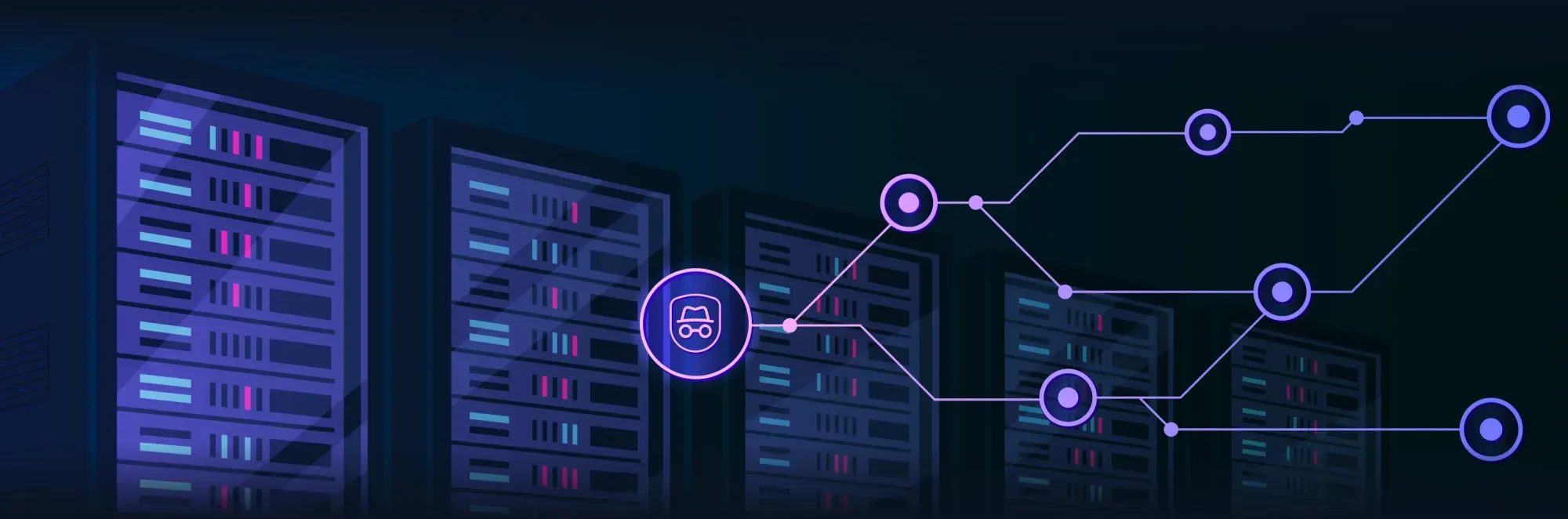
A decentralized privacy infrastructure distributes power and visibility across many nodes so that no single actor can reconstruct your activity. Instead of routing everything through a company-controlled cluster, traffic traverses independent relays—often in different jurisdictions—with layered encryption at every hop.
Identity is not anchored to KYC, phone numbers, or email. In our world, anonymity is a feature, not an anomaly. You create an account without surrendering a single piece of personally identifying information, and the network still works, still routes, and still delivers messages without knowing who you are.
Did You Know?
The average identity is exposed to about nine breaches and has around 15 breach records, which shows how dangerous centralized identity silos are compared to user-controlled, decentralized credentials.
4. The Metadata Problem: Why Centralized Architectures Keep Exposing You
Most people fixate on message content and ignore metadata. Centralized systems love that, because metadata is where the real surveillance value lives. When, where, how often, and with whom you communicate paints a far more detailed picture than the words themselves.
We have shown how a seemingly harmless metadata trail can reconstruct someone's life, from work patterns to private relationships. Centralized infrastructures log that trail by default, tie it back to your phone number and device, and keep it available for correlation, profiling, and demand-driven access.
5. Decentralized Privacy Infrastructures and Metadata Minimization
Decentralized privacy infrastructures are designed to treat metadata as toxic. The less that exists, the less there is to correlate, steal, or weaponize. Instead of one provider logging your every interaction, multiple relays see only partial, encrypted fragments of your traffic.
In our DarkMesh approach, messages are wrapped in multiple layers of encryption and passed across a peer-assisted network. No single relay sees both who you are and who you are talking to. The metadata trail is broken into meaningless shards, not stored as a centralized dossier.
6. Identity, KYC, and Anonymity: Centralized vs Decentralized Approaches
Centralized messaging platforms are addicted to identity. They demand your phone number, your email, and sometimes full KYC, then build a graph of your contacts around it. Every message you send is forever linked back to a real-world person that can be traced, profiled, and pressured.
We reject that model. For us, anonymity is not suspicious—it is necessary for real privacy. Blockd does not require phone numbers or email addresses. There is no KYC that ties your legal identity to your messaging. In a world where your metadata trail can expose your life, being anonymous is not optional, it is your only defense.
Did You Know?
61% of data breaches in 2023 were malware-related, exposing centralized identity stores and credential silos—exactly what decentralized, user-controlled privacy infrastructures are designed to avoid.
7. Routing and Infrastructure: Centralized Servers vs Tor and Decentralized Relays
Centralized platforms typically operate their own server clusters and CDNs. All traffic flows through infrastructure they control, which means they can log it, inspect metadata, and tie it back to your account. If they keep logs, they can be compelled to hand them over.
We chose a different path. Blockd leverages the actual Tor network, a mature, globally distributed anonymity network, combined with our decentralized DarkMesh relays. Your messages travel across multiple Tor hops and independent relays, with encryption peeled away at each stage so that no point in the route ever knows both who you are and where your message is going.
8. Storage, Data Ownership, and Configurability in Decentralized Designs
Centralized messaging apps usually dictate where your messages live. They store your conversations in their cloud, on their terms, with their retention policies. You do not control whether data is kept, for how long, or in which jurisdiction.
Our philosophy is simple: you decide where your data lives, or if it exists at all. Blockd gives you configurable storage options, such as on-device storage, temporary or ephemeral modes, and Blockd-managed cloud, with a future path to user-owned blockchain storage. This is privacy by architecture, not privacy by policy document.
9. Comparing Threat Models: What Each Infrastructure Can and Cannot Protect You From
Centralized privacy infrastructures are built for convenience and growth, not for resisting coercion, mass surveillance, or targeted unmasking. If an attacker, a government, or an insider compromises the central provider, your identity, metadata, and communication history are exposed in one shot.
Decentralized privacy infrastructures are designed for adversarial conditions. When no one party holds the full picture, there is nothing coherent to steal or compel. In Blockd, there are no central logs to leak, no master identity database to breach, and no backdoor for us to quietly exploit. The system is architected so that what does not exist cannot be taken.
10. How Blockd Embodies a Decentralized Privacy Infrastructure
We did not start from “how do we build a messaging app” and add privacy on top. We started from “how do we make people invisible” and then built messaging inside that constraint. That is why Blockd is architected around anonymity, Tor routing, decentralized relays, and zero-knowledge principles.
Our DarkMesh protocol combines three pillars: zero-knowledge encryption across all layers, onion-style routing through Tor and decentralized nodes, and infrastructure that intentionally avoids collecting identifying data. We do not log what you say, who you are, or who you speak to. There is nothing for us to sell, leak, or surrender.
Conclusion
Centralized privacy infrastructures ask you to trust their intentions while they centralize your risk. They keep your identifiers, your metadata, and your communication trails in one place, then promise to guard them. That model has failed repeatedly, and the breach and fraud statistics prove it.
Decentralized privacy infrastructures take a different stance. They reduce what anyone can see, distribute what little remains, and operate on the principle that privacy is not granted—it is engineered. At Blockd, we commit to that principle: no phone numbers, no tracking, no retained identity. We do not just encrypt your messages—we work to erase the trail that leads back to you.
.png)
.png)
.png)
.png)
.png)
.png)
.png)
.png)
.png)
.png)
.png)
.png)
.png)
.png)





_thumb.png)