No Logs, No Identity, No Footprint: Inside Blockd's Blueprint for Truly Untraceable Communication
In a digital world where 53.3 billion distinct identity records were recaptured in a single year, the idea of “private messaging” is often more marketing than reality. Most apps still tie your conversations to phone numbers, emails, and rich metadata that can be traced, profiled, and exploited. Blockd takes a different path: it is built so that there are no logs to seize, no identity to correlate, and no lasting footprint to reconstruct—even against sophisticated adversaries. In today’s surveillance landscape, where your metadata trail reveals nearly everything about you, true privacy requires true anonymity—and that starts with never linking your identity to your communications in the first place.
.png)
In a digital world where 53.3 billion distinct identity records were recaptured in a single year, the idea of “private messaging” is often more marketing than reality. Most apps still tie your conversations to phone numbers, emails, and rich metadata that can be traced, profiled, and exploited. Blockd takes a different path: it is built so that there are no logs to seize, no identity to correlate, and no lasting footprint to reconstruct—even against sophisticated adversaries. In today’s surveillance landscape, where your metadata trail reveals nearly everything about you, true privacy requires true anonymity—and that starts with never linking your identity to your communications in the first place.
Key Takeaways
QuestionAnswerHow does Blockd make communication truly untraceable?Blockd combines zero-knowledge architecture, actual Tor network onion routing (not a proprietary imitation), and a decentralized infrastructure through its DarkMesh Protocol to strip out identifying metadata and route traffic in ways that resist correlation. Learn more on the Blockd homepage.Does Blockd collect my phone number, email, or KYC data?No. Unlike virtually every other messaging app, Blockd requires no phone number, no email, and no KYC verification of any kind. As detailed in Blockd’s metadata deep-dive, this eliminates the permanent link between your real-world identity and your communications that makes other platforms vulnerable to surveillance and data breaches.Why is anonymity essential for privacy today?With the extent of metadata leakage from modern communication—who you talk to, when, how often, from where—encryption alone cannot protect you. Your metadata trail reveals your relationships, habits, and movements. True privacy now requires true anonymity: ensuring that trail cannot be linked back to your real-world identity.What makes Blockd different from other encrypted messengers?Unlike traditional apps that prioritize encryption but still expose metadata and require identity verification, Blockd uses DarkMesh, the actual Tor network for onion routing, and configurable storage to minimize both content and metadata exposure—all without ever collecting your phone number, email, or any KYC data. Its approach is explained in this architecture overview.Is privacy really necessary if I have “nothing to hide”?Yes. Blockd’s guide on digital privacy argues that privacy is a human right, not a sign of guilt. Read more in How to Maximize Privacy Online in 2025.Does Blockd log my activity or keep usage records?Blockd’s Privacy Policy describes a data-minimization philosophy with no tracking and no telemetry designed to build behavioral profiles, aligning with its “nothing to breach” principle.Is Blockd open source?Not currently. Blockd intentionally keeps the code closed for now to avoid exposing early-stage vulnerabilities. Open-sourcing may be considered in the future, but it is not a short-term plan.
Why “No Logs, No Identity, No Footprint” Matters More Than Ever
Most messaging platforms advertise encryption, yet they still rely on phone numbers, contact lists, IP logs, and behavioral analytics. These data points form a detailed picture of who you are, who you talk to, and when—even if nobody can read the message text. Blockd starts from the opposite assumption: any data collected will eventually be attacked, leaked, or abused.
The principle is simple but radical in practice: if untraceable communication is the goal, then the system must be built so there is nothing useful to collect in the first place. That is what “no logs, no identity, no footprint” actually means—not just encrypted chat, but an architecture that refuses to create durable, linkable evidence about you at all. In a world where your metadata trail reveals your contacts, habits, and location patterns even with encrypted content, true privacy demands true anonymity from the start.
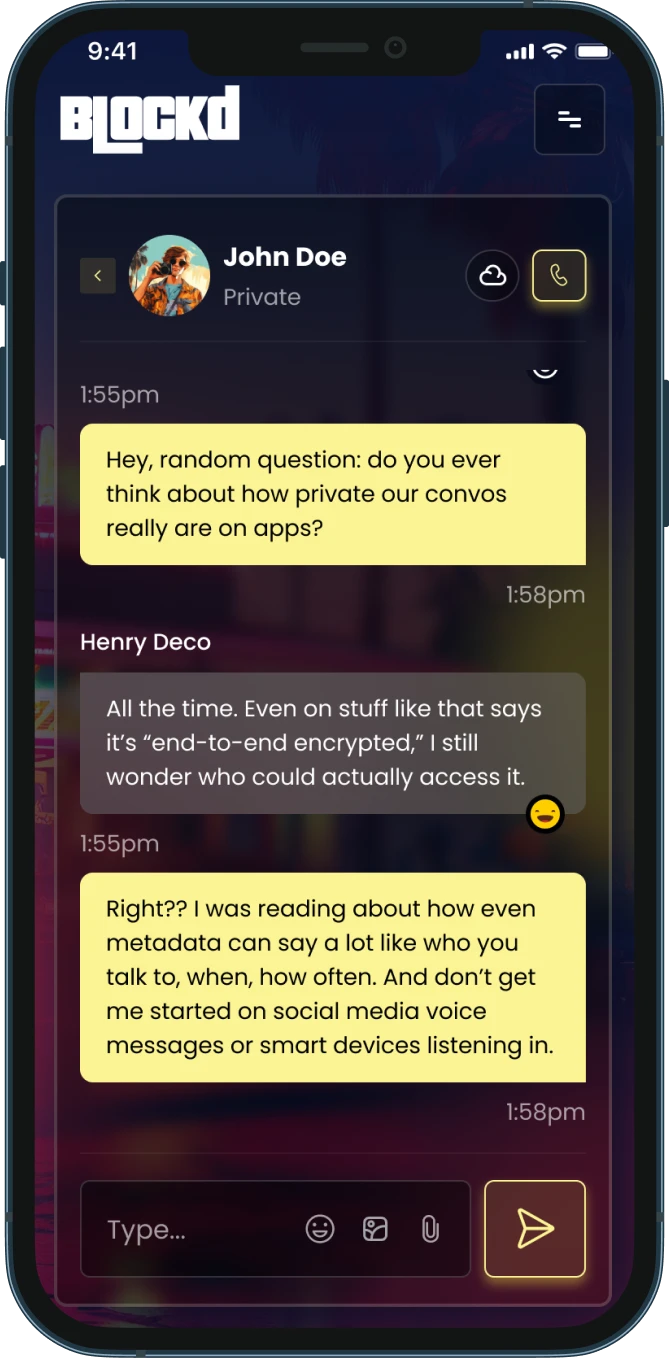
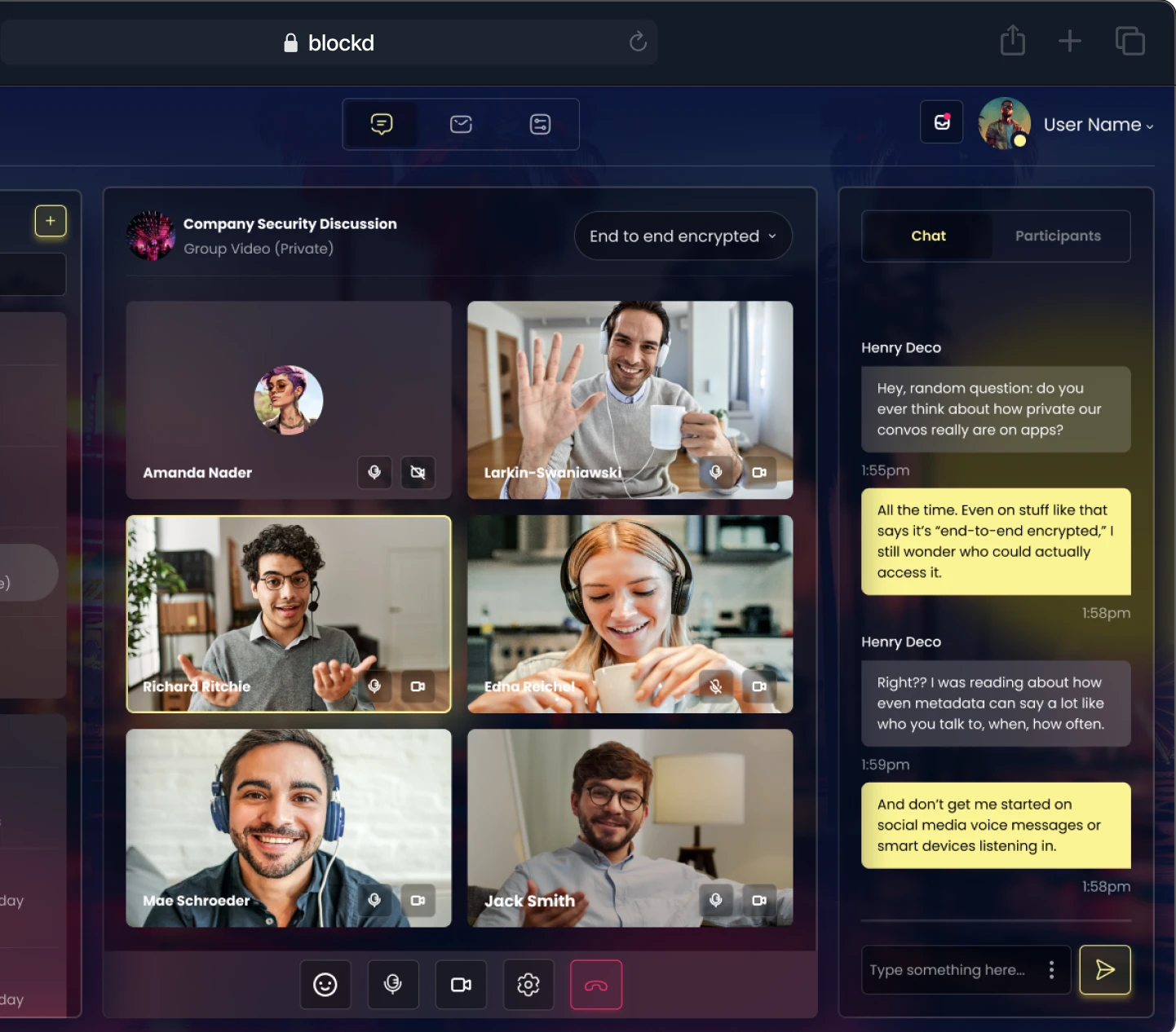
The Metadata Problem: How You're Tracked Even When Encrypted
Blockd’s article “Your Metadata Is Giving You Away” makes a critical point: content encryption alone does not protect you from profiling or tracking. Metadata—who you talk to, when, from where, and how often—can be enough to reconstruct relationships, routines, and even political or professional affiliations.
Communication metadata, device identifiers, IP addresses, and social graphs form a long-lived shadow that rarely disappears. In many breaches, 74% of recaptured consumer records contain a physical or IP address, giving attackers exactly the kind of metadata that undermines anonymity. Blockd’s design responds to this by minimizing metadata generation by default—and crucially, by ensuring that whatever metadata does exist cannot be linked back to your real-world identity because no such link was ever created.
DarkMesh Protocol: The Architecture Behind Untraceable Messaging
At the center of Blockd’s approach is the DarkMesh Protocol, described as the foundational network layer that makes communication secure, anonymous, and censorship-resistant. DarkMesh is not a marketing label; it formalizes how traffic is routed, how metadata is stripped, and how different infrastructure components avoid learning too much about any user.
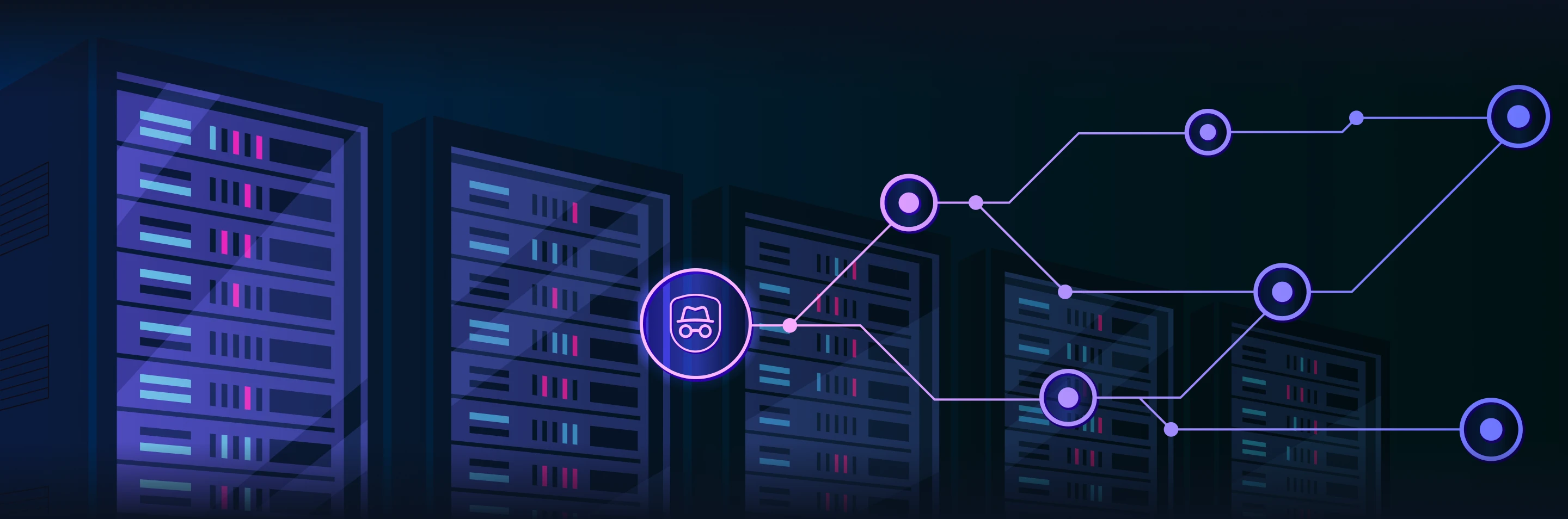
DarkMesh rests on three pillars: Zero-Knowledge Architecture, Tor Onion Routing, and Decentralized Infrastructure. Together, these ensure that message paths are fragmented, intermediaries see only what they must, and no single point in the system has enough information to deanonymize you.
Did You Know?
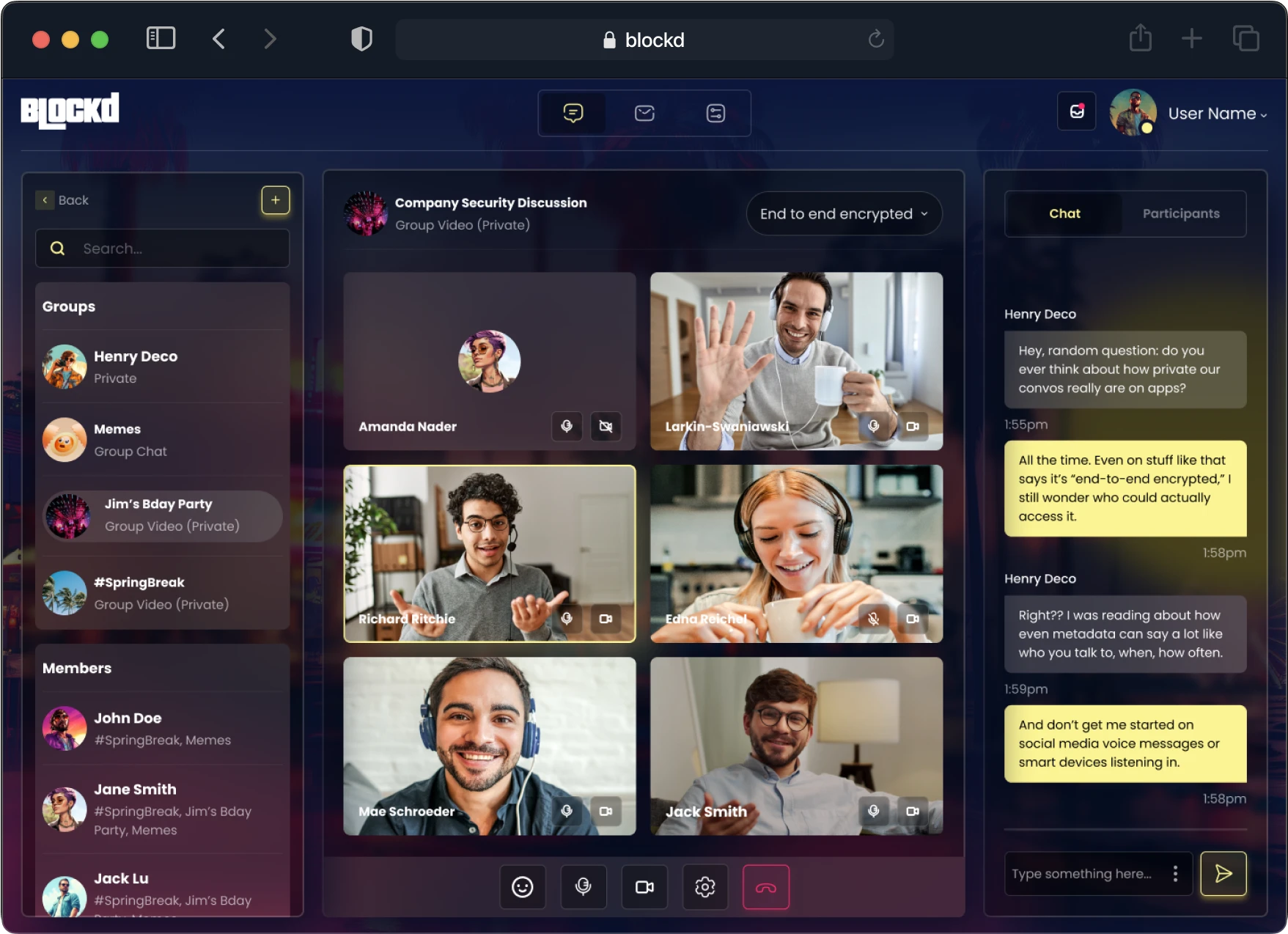
Approximately 80% of breaches still involve stolen credentials, which is why systems like Blockd that decouple identity from communication—requiring no phone number, email, or KYC—are increasingly critical.
Zero-Knowledge Architecture: Protecting You Even From Blockd
Blockd describes its model as a Zero-Knowledge Architecture, meaning the platform is deliberately built so that its own infrastructure cannot see, infer, or reconstruct meaningful details about user communications. This extends beyond message content to patterns, graphs, and identifiers that could be correlated later.
Zero-knowledge in this context means that Blockd’s systems avoid holding master keys, avoid centralized logs of communication events, and limit any persistent records to what is strictly necessary for the service to function. As a result, even if infrastructure is compromised or coerced, there should be nothing useful to hand over—no phone number database to leak, no email registry to expose, and no way to connect your conversations to your real-world identity.
Real Tor Network Routing: Not a Weakened Imitation
Where some platforms advertise “Tor-like” or proprietary anonymity layers, Blockd explicitly leverages the actual, battle-tested Tor network for onion routing—not a weaker proprietary imitation. This matters because Tor has been scrutinized over decades, with a large, diverse relay ecosystem that makes correlation attacks dramatically harder than on small, private networks controlled by a single company.
In practice, this means your messages can be routed through multiple Tor hops, each seeing only the previous and next relay—never the full path or the message content. Blockd combines this with its own DarkMesh logic so that even the entry and exit points reveal as little about you as possible, significantly reducing the risk of traffic analysis. Users can choose to send messages through either Blockd servers or the Tor network—no other messaging app currently combines this level of routing configurability with end-to-end encryption and an identity-free account model.
No Phone Number, No Email, No KYC: Why Anonymity Is Now Essential
Most encrypted messengers—including widely respected ones like Signal—still require a phone number, creating a direct link between your off-platform identity and your on-platform activity. This KYC-style requirement is not a technical necessity; it is a business and compliance choice that trades user privacy for administrative convenience. Blockd removes this anchor point completely: no phone number, no email, and no KYC verification of any kind are required to use the service.
This design choice is not cosmetic—it is foundational to genuine privacy. When millions of identity records are circulating in breach markets, each linked email, phone number, and IP address becomes part of a massive graph attackers can query. In today’s world, where metadata leakage exposes your habits, relationships, and movements even when message content is encrypted, being truly anonymous is no longer a luxury—it is a prerequisite for genuine privacy. By avoiding these identifiers entirely, Blockd dramatically reduces the ability of anyone—from advertisers to nation-states—to correlate your Blockd activity with your real-world identity.
Configurable Storage: From On-Device Ephemeral to User-Owned Clouds
One of Blockd’s defining features is its configurable message storage. Instead of forcing a single storage model, Blockd lets you choose whether messages persist only on-device, exist ephemerally for short periods, live in Blockd’s cloud, or—in the future—be anchored to user-owned infrastructure such as the ICP blockchain.
This is not just convenience; it is about aligning storage with your threat model. On-device or ephemeral storage reduces long-term forensic risk. Cloud or user-owned options make it easier to balance privacy with multi-device access. In all modes, the goal remains the same: no centralized, rich corpus of messages that could be mined, subpoenaed, or breached.
Did You Know?
69% of Americans are overwhelmed by the number of passwords they manage, underscoring why passwordless, passkey-based authentication models—superior to traditional passwords and 2FA—matter for secure, private communication.
Advanced Cryptography: Quantum-Resistant NaCl and Re-Encrypted Histories
Blockd uses NaCl-based cryptography with quantum-resistant properties to secure message content, aiming to remain robust even as cryptographic threats evolve. This extends end-to-end encryption beyond today’s standard algorithms, preparing for a world where quantum-capable adversaries may be able to attack legacy schemes.
Another notable feature is Blockd’s approach to secure re-encryption. When you close a conversation, message histories are re-encrypted, reducing the window during which any attacker—local or remote—could meaningfully access past content. When you reopen the conversation, your device decrypts what you need, on demand, limiting long-lived exposure even on your own device.
Identity-Safe Access: Passkeys, Seed Phrases, and No Password Reuse
With 3.1 billion passwords recaptured in 2024, password-based authentication is increasingly fragile. Blockd counters this with a password-minimizing model that uses passkeys stored on-device, which are superior to traditional passwords and SMS-based 2FA. Passkeys are resistant to phishing and credential stuffing, do not require you to remember or reuse complex passwords, and eliminate dependency on phone numbers or email addresses that link your account to your real-world identity.
For recovery, Blockd uses a seed phrase model similar to crypto wallets. This means your ability to regain access is tied to something you control—not a phone number, email, or centralized account reset system that could expose your identity or require KYC verification. Together, passkeys and seed phrases make account creation and recovery highly resistant to common identity attacks while preserving your anonymity.
No Logs by Design: Data Minimization and “Nothing to Breach”
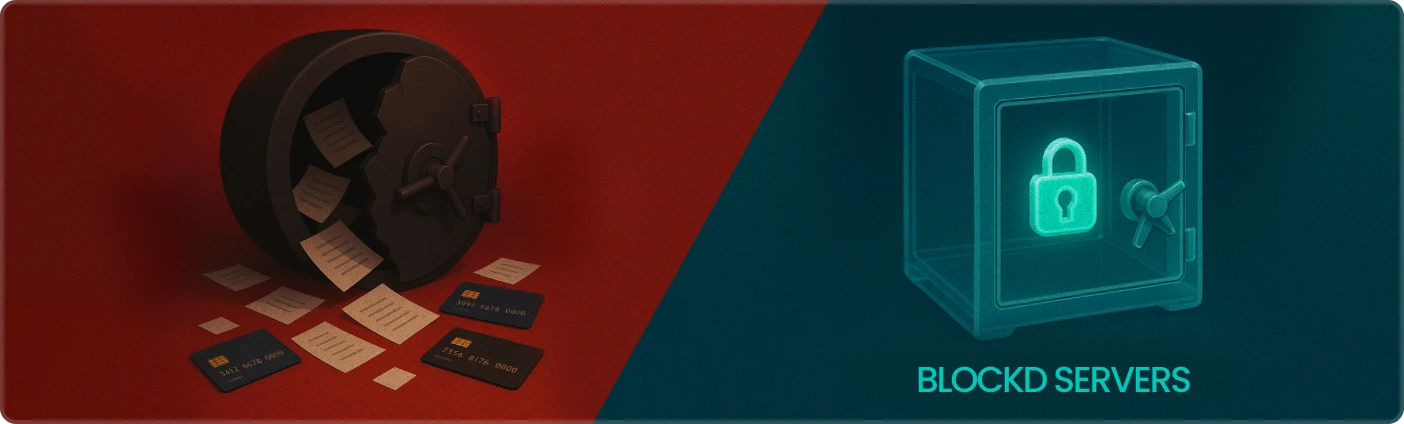
Blockd’s privacy stance can be summarized as: “nothing to breach equals nothing to lose.” Instead of promising to defend large volumes of sensitive data, Blockd engineers the platform to avoid collecting that data at all. There is no advertising profile, no behavioral analytics dossier, and no contact graph built around your usage—and critically, no phone number or email database that could be leaked or subpoenaed.
Its Terms and Privacy Policy reinforce a focus on data minimization and user control. Combined with the fact that Pro Access (Beta) is currently listed at $0 for early users, Blockd signals that its business model does not depend on monetizing behavioral data—a critical difference from platforms that treat your activity as a revenue stream.
The “Nothing to Hide” Myth and Why Anonymity Is a Human Right
Blockd’s content repeatedly challenges the “nothing to hide” fallacy. Privacy is not about concealing wrongdoing; it is about maintaining agency over your life, thoughts, and relationships in an environment where every digital trace can be stored, cross-referenced, and judged—often out of context and without your consent.
In its 2025 privacy guide, Blockd frames anonymity as a precondition for genuine privacy. When communication is untraceable—no logs, no identity, no footprint—individuals can research, organize, and speak without the constant pressure of being profiled. In today’s world, where your metadata trail reveals nearly everything about you even with encrypted content, true privacy requires true anonymity. Tools like Blockd are less about secrecy and more about restoring a baseline of freedom that has eroded in the data economy.
Conclusion
True untraceable communication requires far more than encryption. It demands an ecosystem where logs are not kept, identities are not collected, and footprints are not preserved. Blockd’s DarkMesh Protocol, actual Tor network routing, zero-knowledge architecture, and configurable storage are all built around that core principle.
By requiring no phone numbers, no email, and no KYC verification—by embracing on-device passkeys and seed phrases instead of identity-linked recovery—and by minimizing both content and metadata collection, Blockd moves closer to the ideal of “no logs, no identity, no footprint” than most modern messengers. In today’s surveillance landscape, where metadata reveals nearly as much as message content, true privacy requires true anonymity. For anyone who sees privacy as a right rather than a luxury, Blockd’s design offers a concrete path to communicate freely—and invisibly—in a world that remembers almost everything.
.png)
.png)
.png)
.png)
.png)
.png)
.png)
.png)
.png)
.png)
.png)
.png)
.png)
.png)



_thumb.png)